Context and Setting of Act 3

Act 3 unfolds in Salem’s austere courthouse, where the air is thick with fear and superstition. The courtroom’s wooden benches, dim lantern light, and the judge’s stern presence set a tense atmosphere, reflecting the town’s desperate need for order amid rising hysteria. Tension mounts. soon.!
Courthouse Environment and Atmosphere
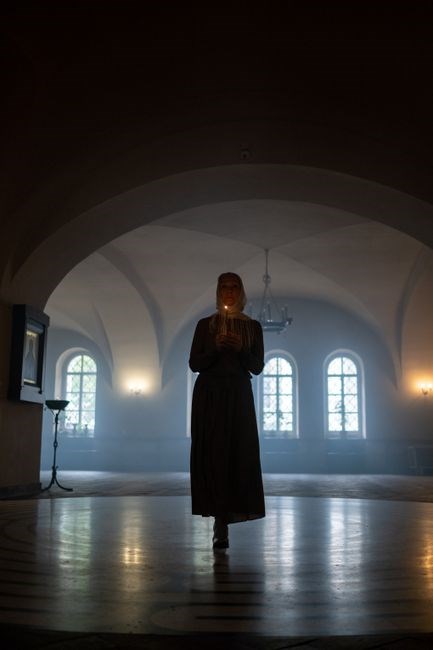
In Act 3 of The Crucible, the setting shifts from the cramped, candlelit homes of Salem to the austere courthouse that dominates the town’s public life. The courtroom’s wooden benches, the low, flickering lantern light, and the heavy, iron judge’s bench create an oppressive backdrop that mirrors the community’s collective anxiety. The air is thick with the scent of sweat, fear, and the faint, acrid smell of the black powder used to seal the doors after the town’s last witch‑hunt. The judge’s gavel, a symbol of authority, echoes off the stone walls, reminding everyone that the law is both a shield and a sword. The courthouse’s austere décor—plain benches, a single, stained‑glass window, and a blackened, iron plaque bearing the town’s seal—underscores the severity of the proceedings. The presence of the town’s most respected elders, including Reverend Parris and Judge Danforth, adds a layer of moral weight, while the murmuring of the crowd outside the courthouse windows creates a constant, low hum of gossip and speculation. The atmosphere is charged with a palpable tension that rises each time a new accusation is made, and the sense of impending doom is amplified by the stark, unadorned interior. The courthouse, therefore, is not just a physical space but a symbolic arena where the town’s fears, hopes, and injustices collide, shaping the narrative’s climax and the characters’ fates.
Even the courthouse’s heavy wooden doors, which creak with each step, seem to echo the town’s collective dread. The judge’s stern gaze, the clerk’s nervous fidgeting, and the murmurs of the crowd outside all contribute to a palpable sense of impending judgment that hangs over every testimony.

Timeline of Events Leading to Act 3
Before the courthouse doors close on Act 3, Salem’s frantic witch trials have already spiraled into a frenzy. In Act 1, Abigail Williams and the other girls begin accusing neighbors, sparking a wave of hysteria that quickly consumes the town’s social fabric. By Act 2, the town’s leaders—Reverend Parris, Judge Danforth, and the magistrates—have convened a series of informal hearings to quell the chaos, but the accusations keep mounting. The court’s first formal session in Act 2 ends with the sentencing of several townspeople, including Giles Corey, who is arrested for refusing to name accomplices. Meanwhile, John Proctor’s wife, Elizabeth, is arrested and imprisoned, and the community’s trust in the legal system erodes as rumors of false testimony spread. As the days pass, the magistrates gather more evidence, but the court’s reliance on spectral evidence and the girls’ testimonies creates a climate of fear that pushes the town toward a climactic showdown. The final days before Act 3 see the town’s leaders preparing for a decisive trial, hoping to restore order and legitimacy. The courthouse, now a symbol of both justice and terror, stands ready to confront the truth—or the illusion—of Salem’s collective guilt.
In this atmosphere, the stakes rise, and the line between justice and hysteria blurs.

In the courthouse, each participant carries a distinct agenda that shapes the proceedings. Judge Danforth seeks to preserve the court’s authority and quell the panic that threatens to destroy Salem’s social order; he is driven by a rigid belief that the law must triumph over doubt, even when evidence is flimsy. Reverend Parris, meanwhile, is motivated by self‑preservation and the desire to protect his reputation; he fears that any admission of error will expose his own complicity and undermine his standing in the community. Giles Corey arrives with a fierce determination to defend his wife’s innocence; his refusal to name accomplices is an act of defiance against a system that demands confession at the cost of liberty. John Proctor is driven by a desperate need to clear his wife’s name and to expose the falsehoods that have corrupted the court; his moral integrity forces him to confront the hysteria head‑on, even at great personal risk. Mary Warren, torn between loyalty to the girls, is motivated by fear to and retribution. Rebecca Nurse, a quiet pillar of the community, is motivated by a desire to maintain her reputation for honesty and to protect her family from the court’s wrath. Each character’s motivations intertwine, creating a complex web that fuels the drama of the trial. The courtroom’s silence hangs heavy, a testament to the weight of each decision before the final verdict! Every voice in the room echoes the town’s fear, yet some whisper hope for truth. in the hush still.
Themes of Justice and Hysteria
The courtroom in Act III becomes a crucible for the clash between law and panic. Justice, as represented by Judge Danforth, is portrayed as a rigid, inflexible system that demands certainty and swift punishment. His insistence on “proof” is paradoxical, for the evidence presented is largely circumstantial and the testimonies of the girls are swayed by fear. Danforth’s motivation is to preserve the court’s authority, yet his decisions ultimately reveal a system that values reputation over truth. Hysteria, on the other hand, is the invisible force that permeates every corner of Salem. It is fueled by the collective anxiety of a community that has lost its moral compass. The girls’ frantic accusations, the whispers of witchcraft, and the fear of divine judgment create a climate where rational doubt is suppressed. The tension between these forces is palpable: the judge’s stern proclamations clash with the trembling voices of the accused, and the court’s proclamations of justice are undermined by the very hysteria they aim to quell. This dynamic illustrates how a society can be driven to extreme measures when the line between justice and fear becomes blurred. The play invites the audience to question whether the pursuit of justice can ever be objective when it is conducted in panic. The result is a tragic cycle where the pursuit of righteousness fuels the very madness it seeks to eradicate, leaving the community to confront the consequences of a justice system that has been corrupted by fear. The themes of justice and hysteria intertwine, revealing a society that has lost its way, and the characters’ struggles highlight the dangers of allowing fear to dictate the law. The courtroom, a symbol of order, becomes a battlefield where truth is sacrificed for the sake of maintaining social cohesion, and the audience is left to ponder the fragile balance between law and panic.

Key Developments and Conflicts
Giles Corey’s bold accusation sets the court ablaze, while Reverend Parris’s charge against Proctor sparks debate. Judge Danforth’s stern sentencing decisions deepen the conflict, and Mary Warren wrestles with her conscience, torn between fear and truth. now
Giles Corey’s Accusation and its Implications
When the court opens, Giles Corey, a farmer known for his quiet defiance, steps forward and declares that he has “broke charity with the woman.” This cryptic statement, rooted in a local legal phrase meaning he has failed to support a widow, is a veiled indictment of the court’s treatment of Rebecca Nurse. By invoking this phrase, Corey claims that the court has betrayed the social contract that protects the vulnerable, thereby exposing the hypocrisy of the magistrates who, while condemning the accused, have themselves neglected their duty to uphold justice. His accusation forces the judge to confront the moral weight of the proceedings, as it suggests that the court’s actions are not merely legal but also ethical violations. The implication is that the court’s legitimacy is compromised, and that the hysteria it fosters is a direct result of institutional failure. Corey’s bold move also shifts the narrative: the court can no longer present itself as a neutral arbiter; instead, it becomes a suspect actor in the very witchcraft it seeks to eradicate. This shift intensifies the conflict between the accused and the accusers, as the accused now have a legitimate claim to challenge the court’s authority. The audience is left to question whether the court’s decisions are based on evidence or on fear, and whether the legal system can survive when its own principles are undermined by the very people it is meant to protect. In short, Corey’s accusation destabilizes the courtroom’s power structure, forcing everyone to reconsider the foundations of justice in Salem. Thus, Giles Corey’s statement becomes a catalyst for the unfolding drama, reminding all that the pursuit of truth must outweigh the fear of accusation. His words echo through the courthouse, prompting Judge Danforth to pause, and forcing the townspeople to confront the reality that the very laws they uphold may be the source of their own peril. The accusation also galvanizes other witnesses, encouraging them to speak out, thereby amplifying the collective resistance against the court’s overreach.

Reverend Parris’s Accusation of John Proctor

When John Proctor arrives at the courthouse with Mary Warren, Reverend Parris, the town’s spiritual leader, seizes the moment to weaponize his fear of scandal. He claims that Proctor has “sinned” by engaging in an illicit affair with Abigail Williams, a claim that is both a personal attack and a strategic move to undermine Proctor’s credibility. Parris’s accusation is not merely a statement of fact; it is a deliberate attempt to frame Proctor as a moral corrupter, thereby justifying the court’s pursuit of witchcraft. By labeling Proctor a “sinner,” Parris taps into the community’s collective anxiety about sin and divine punishment, making it easier for the judge to dismiss Proctor’s defense as a cover for hypocrisy. The accusation also serves to protect Parris’s own reputation, as he positions himself as the guardian of Salem’s moral order. In the tense courtroom, Parris’s words echo the broader theme of hysteria, illustrating how personal vendettas can be disguised as religious duty. The audience witnesses how the accusation shifts the power dynamic: Proctor, once a respected farmer, is now a suspect whose every action is scrutinized. The tension escalates as Parris’s claim forces the judge to confront the possibility that the court’s proceedings are driven more by fear than by evidence. Parris’s accusation, therefore, becomes a pivotal moment that highlights the fragile boundary between justice and persecution in Salem’s society. It also foreshadows the tragic unraveling of the community, as the court’s reliance on unverified claims erodes the very foundations of truth and reason that once held the town together. The scene underscores the danger of allowing personal grievances to dictate public judgment, a warning that resonates beyond the play’s historical setting. Parris’s words, delivered with fervor, set the stage for the ensuing conflict, compelling both the court and the audience to question the legitimacy of the accusations that drive the Salem witch trials. In this way, Parris’s accusation of John Proctor becomes a catalyst for the moral crisis that defines Act Three, exposing the corrosive power of fear when it is wielded by those in positions of authority. Moreover, Parris’s claim is reinforced by his own testimony, wherein he insists that the court must act swiftly to preserve Salem’s sanctity. He argues that any delay would invite further corruption, a rhetoric that resonates with the judge’s own urgency. This rhetoric, however, masks a deeper fear: Parris fears that his own authority is being challenged by Proctor’s reputation and his outspoken nature. By framing Proctor as a sinner, Parris attempts to silence dissent and consolidate his influence over the town’s moral compass. The audience can sense the undercurrent of political maneuvering, as Parris’s accusation is less about truth and more about maintaining control in a society that is already unraveling under the weight of mass hysteria.

Judge Danforth’s Sentencing Decisions
Judge Danforth’s rulings in Act 3 are a stark illustration of how authority can become complicit in injustice when it is guided by fear rather than evidence. In the courtroom, Danforth’s voice is measured, yet his decisions are swift and unforgiving. He upholds the court’s mandate to punish those accused of witchcraft, and he does so with a chilling certainty that the accused are guilty. The judge’s insistence on the “truth of the court” is a recurring theme, as he repeatedly reminds the jury that the court’s verdicts are final and that the accused must accept their fate. Danforth’s sentencing is not merely a legal act; it is a statement of power that reinforces the existing social hierarchy. By refusing to entertain any doubt, he effectively silences dissenting voices, such as those of Reverend Parris or the townspeople who question the legitimacy of the evidence. The judge’s decisions also reveal his personal fear of the town’s reputation. He is concerned that any leniency could be perceived as weakness, thereby inviting further accusations and undermining the court’s authority. Danforth’s approach to sentencing is, therefore, a calculated strategy to maintain control over Salem’s fragile social fabric. He uses the court’s authority to enforce conformity and to eliminate perceived threats to the community’s moral order. In this way, Danforth’s sentencing decisions become a pivotal point in Act 3, as they determine the fate of those accused and shape the direction of the trial!
The judge’s unwavering stance also highlights the broader theme of the play: the danger of allowing hysteria to override reason. By refusing to consider alternative explanations, Danforth becomes a symbol of the corrupting influence that unchecked power can have on justice. His decisions ultimately force the audience to confront the ethical implications of a legal system that prioritizes fear over truth, and they set the stage for the tragic events that follow in the subsequent acts.
Mary Warren’s Internal Conflict

Mary Warren’s internal conflict is a pivotal moment in Act 3, revealing the fragile balance between fear, loyalty, and conscience. Initially, she is eager to prove her innocence and support the court’s quest for purity. Yet, as the trial progresses, the weight of her own doubts and the pressure from her peers begin to erode her confidence. She is torn between her desire to protect herself from the looming threat of being accused and her growing awareness that the court’s procedures are increasingly driven by hysteria rather than evidence. The tension escalates when she witnesses the brutal treatment of those who refuse to comply, and she starts to question whether the justice she has been taught to uphold is truly just. Her internal struggle is further complicated by her personal connection to John Proctor, whose integrity she admires and who represents a moral compass that clashes with the court’s demands. As she confronts the possibility of being forced to lie or to condemn an innocent man, Mary’s conscience battles the instinct to survive. The emotional toll of this dilemma is evident in her trembling voice, her hesitant gestures, and her desperate attempts to find a middle ground between truth and self-preservation. Ultimately, her internal conflict underscores the play’s broader theme of how fear can corrupt even the most well-intentioned individuals, forcing them to choose between personal safety and moral responsibility. Her voice trembles, she remains resolute, refusing to betray herself.!
Discussion and Study Tools
Explore guided questions, create flashcards, analyze key scenes, and use role‑play activities to deepen understanding of Act 3’s themes and character dynamics. Engage with supplemental videos and discussion forums for enriched study. Add quizzes for reinforcement and
Proctor’s Secret Revelation
John Proctor’s confession in Act 3 is the fulcrum of the play’s moral crisis. Facing the possibility of execution, he finally admits his illicit affair with Abigail Williams, the catalyst for the Salem witch trials. His confession is not a plea for mercy but a desperate attempt to expose the hysteria that has devoured his town. By revealing the truth, Proctor seeks to undermine the court’s authority and to protect the innocent, even at the cost of his own life. He declares, “I have no more to give than my soul,” illustrating the depth of his remorse and the weight of his conscience. The audience witnesses the internal battle between his desire to preserve his reputation and his obligation to confront the injustice. Proctor’s admission also forces the audience to confront the theme of integrity versus self‑preservation. The courtroom becomes a stage where the truth is weaponized, and the judge’s insistence on “proof” is juxtaposed with the reality of fear and manipulation. The scene is charged with tension as Proctor’s words echo through the austere hall, challenging the court’s legitimacy. His confession is a pivotal moment that shifts the narrative from accusation to accountability, forcing both characters and viewers to question the morality of the legal system and the consequences of unchecked power. Proctor’s refusal to name accusers, even under threat, cements his legacy as a principled man, proving that truth, though perilous, is the moral compass.
Role of Evidence vs. Hysteria in the Court
In Act 3 of Miller’s tragedy, the courtroom becomes a battleground where empirical proof clashes with collective panic. Judge Danforth insists on “proof” that is, in practice, a series of spectral testimonies and coerced confessions. The court’s reliance on supernatural evidence—spectral evidence, the “touch” of the accused, and the “signs” in the air—reveals a legal system that has abandoned rationality. The jurors, swayed by fear, accept the testimony of girls who claim to see the accused in the sky, treating it as incontrovertible fact. This reliance on the intangible erodes the integrity of the judicial process, allowing hysteria to dictate verdicts. In contrast, physical evidence is largely dismissed; the only tangible proof, a single knife, is deemed insufficient. The court’s procedures, such as the “spectral evidence” rule, are designed to protect the accused from the chaos of the town’s fear, yet they paradoxically reinforce the hysteria. The tension between evidence and hysteria is further highlighted when Reverend Parris and others demand that the court act swiftly, prioritizing the town’s reputation over due process. The courtroom’s atmosphere—lit by flickering candles, the judge’s stern gaze, and the murmurs of the crowd—creates a psychological pressure that forces witnesses to conform. The result is a series of unjust sentences that underscore the danger of allowing mass panic to override reason. Truth must guide us. Always Now
Character Analysis of Rebecca Nurse
Rebecca Nurse, the eldest daughter of Reverend Nurse, embodies the moral compass of Salem. Her quiet, steadfast faith contrasts sharply with the town’s escalating paranoia. Throughout Act 3, Rebecca’s calm demeanor and refusal to engage in spectral accusations demonstrate her commitment to truth and justice. She is the voice of reason, often reminding the court that “the Devil is a very good man” and that the evidence presented is unreliable. Her unwavering integrity is highlighted when she resists the pressure to testify against her husband, John Proctor, and her own daughter, Mary Warren. Rebecca’s refusal to sign the confession, despite the threat of execution, underscores her courage and moral fortitude. The judge’s insistence on her testimony, coupled with her refusal, illustrates the conflict between law and conscience. Rebecca’s character serves as a foil to the hysteria, illustrating that faith can coexist with rationality. She is a symbol of the innocent suffering under the weight of collective fear. Her death in the court’s final act underscores the tragedy’s moral message: that the pursuit of righteousness can be corrupted by fear and that the innocent may pay the ultimate price for their integrity. In the larger narrative, Rebecca’s steadfastness is a reminder that the moral center of society can be eroded by unchecked hysteria, and that the preservation of truth requires steadfast courage. The audience is left to question whether the legal system truly serves justice or merely perpetuates fear. Thus, Rebecca Nurse stands as a tragic hero whose integrity is both her strength and her downfall. Her gentle presence is a quiet rebellion against the court’s harsh demands. She often speaks in measured tones, reminding everyone that “our lives are not to be decided by the fear of a few.” Her refusal to compromise her principles, even when faced with the possibility of execution, demonstrates a profound moral conviction that transcends self‑preservation. The audience sees her as a beacon of hope, a living testament to the possibility of redemption in a society that has lost its way. Her death, while tragic, serves as a catalyst for the eventual realization that the court’s decisions are driven by fear rather than justice. This realization ultimately fuels the moral arc of the play, urging the audience to reflect on the dangers of allowing hysteria to override reason and compassion.
Suggested Activities and Resources
Students can explore Act 3 through interactive role‑play, debate, and multimedia analysis. A role‑play exercise invites participants to assume the roles of key courtroom figures—Judge Danforth, Reverend Parris, Mary Warren, and Giles Corey—rehearsing their lines while reflecting on motives and ethical dilemmas. After the performance, a guided discussion can probe how hysteria shapes judicial outcomes. For a deeper textual comparison, students may pair the play’s courtroom scene with a contemporary news article about a modern legal proceeding that involved mass media influence. By juxtaposing the two, learners can identify parallels in evidence handling, public pressure, and the impact of reputation on verdicts. A creative writing prompt encourages students to imagine a diary entry from Rebecca Nurse’s perspective, articulating her internal conflict as she faces the court’s demands. Resources such as the “The Crucible: A Study Guide” PDF, the “Judicial Process in Salem” interactive timeline, and the “Hysteria in History” documentary series provide supplemental context. Teachers can also incorporate a “Fact vs. Hysteria” worksheet, prompting learners to list evidence presented in the trial and assess its credibility. Finally, an online forum discussion can allow students to post their reflections, citing specific lines from Act 3 and linking them to contemporary examples of judicial bias. These activities foster critical thinking, empathy, and a nuanced understanding of how fear can distort justice. Additionally, teachers can assign a reflective essay where students analyze how the court’s reliance on spectral evidence parallels modern misinformation, critique of media’s role in shaping public opinion.